If you run a small business, your website is often the first impression people get of what you do. And that’s great! Most of the time. But if your website isn’t accessible, you could be unintentionally turning customers away before they even get started.
So, what does “website accessibility” actually mean—and why should it matter to you?
What is website accessibility?
In simple terms, website accessibility means making sure your website can be used by as many people as possible, including those with disabilities. This might include people who:
Accessibility isn’t about ticking a technical box — it’s about making your website easier for real people to use. Those people may well become your next client or customer!
Why accessibility matters for your business
You might be thinking, “This sounds important, but is it really relevant to my business?” The short answer: yes.
1. You’re reaching more potential customers
Around 1 in 5 people in the UK live with some form of disability. If your website isn’t accessible, that’s a significant portion of potential customers who may struggle to engage with your business—or simply give up and go elsewhere.
2. It improves the experience for everyone
Accessibility improvements often make your website better for all users. Clearer text, better contrast, and simpler navigation help everyone—not just those with specific needs.
3. It supports your SEO efforts
Search engines favour websites that are well-structured, easy to navigate, and clearly written. Many accessibility best practices—like proper headings, alt text for images, and logical layouts are also appealing to Google and other search engines, so they also improve your visibility in search results.
4. It protects your reputation
An inaccessible website can send the wrong message. On the flip side, showing that your business is inclusive and considerate builds trust and credibility.


Common accessibility issues (and easy wins)
The good news is that many accessibility improvements are straightforward. Some common issues we often see when working with website design clients include:
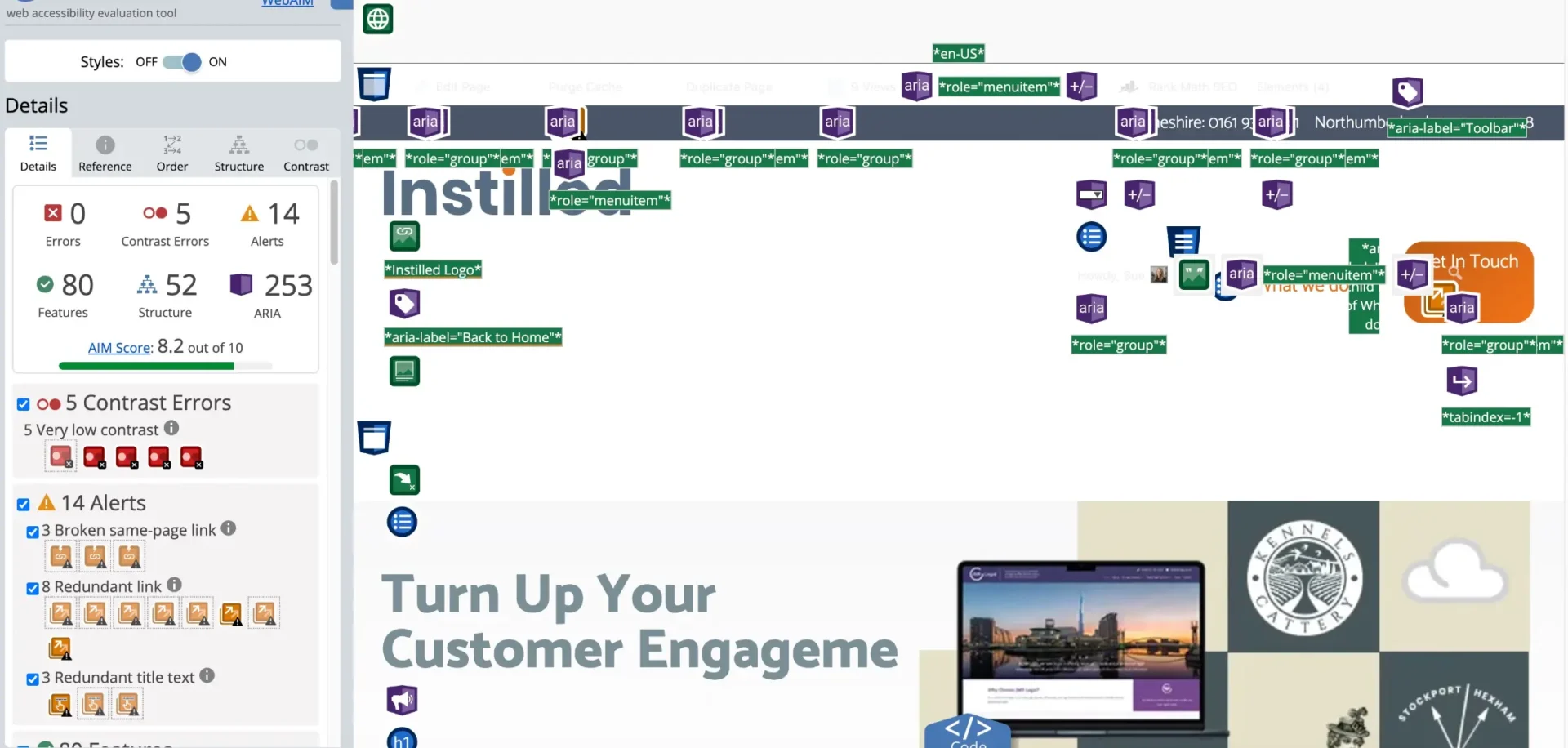
- Poor colour contrast making text hard to read
- Missing image descriptions (alt text) for screen readers
- Small or unclear fonts
- Confusing navigation or menus
- Forms that are difficult to complete or just too long!
Fixing these doesn’t require a complete rebuild—but it does require a thoughtful approach and some site-wide decision-making.
Where to start
If you’re unsure whether your website is accessible, start by asking a few simple questions:
- Can you easily read all the text on your site?
- Is it clear where to click next?
- Do your buttons and Calls to Action clearly show where the user is going?
- Does your site work well on mobile as well as desktop?
- Could someone unfamiliar with your business navigate it without confusion?
If the answer to any of these is “not really,” it’s worth taking a closer look, and we’d be happy to help.
How Instilled can help
At Instilled, accessibility is considered as part of the overall design process—not an afterthought. Whether we’re building a new website or improving an existing one, we focus on creating sites that are:
- Clear and easy to navigate
- Designed with readability in mind
- Built using best practices for accessibility and SEO
- Tested to ensure a smooth experience across devices
For small businesses, this means you don’t need to worry about the technical side—we handle that while keeping your goals front and centre.
Final thoughts
Website accessibility isn’t just about compliance or technical standards. It’s about making sure your business is open and available to everyone who wants to engage with it.
And in practical terms, that means more people can find you, use your site, and ultimately become customers.
If your website hasn’t been reviewed in a while, this is a good place to start. A few thoughtful changes can make a real difference—not just in how your site performs, but in how your business is perceived.